

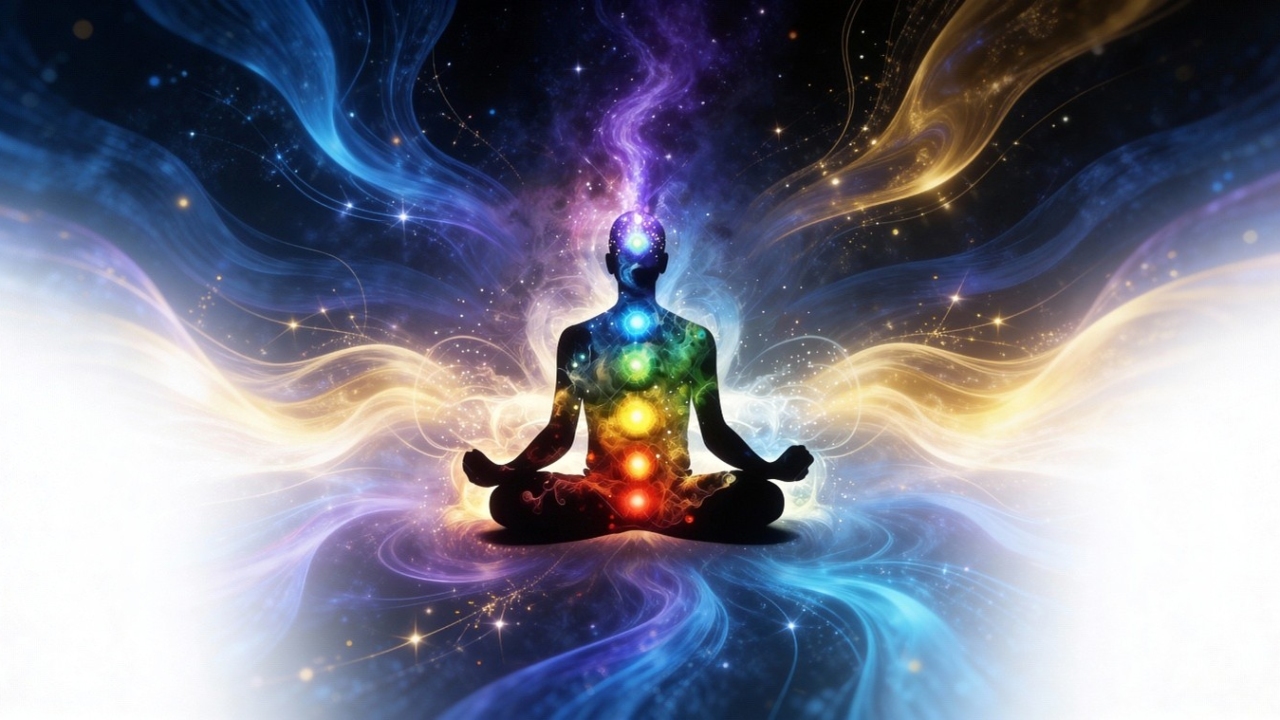
Chakra Alignment & Energy Fields: A Scientific–Spiritual Guide to Self-Awareness
What Is an Energy Field?
An energy field refers to the subtle, dynamic space that many contemplative traditions describe as surrounding and interwoven with the physical body. In systems such as yoga and Ayurveda, this field is understood to reflect emotional, mental and spiritual states, as well as patterns of attention and awareness.
Rather than being viewed as a fixed structure, the energy field is often described as responsive — shifting with stress, rest, emotional states and mindful presence.
Contemporary practitioners sometimes use visualization technologies to observe aspects of this field. Devices based on Gas Discharge Visualization (GDV), for example, capture light emissions from the fingertips under a high-frequency electrical field and translate these into visual representations of bio-electric activity. These images are used for reflection and inquiry, not diagnosis.
What Are Chakras?
The word chakra comes from ancient Indian spiritual traditions and means “wheel” or “circle.” There are seven major Chakras or centers of energy that run along the spine, from the base to the crown of the head.
Each chakra is associated with qualities related to physical life, emotional balance, cognition, expression and consciousness. In contemplative traditions, chakras are not viewed as anatomical structures, but as symbolic maps of inner experience — reflecting how we relate to ourselves, others and the world.
Why Chakra Alignment Matters
When chakras are described as “aligned,” it suggests that energy – often referred to as prana or life force – is flowing through these centers with relative ease and coherence. This state is commonly associated with feelings of clarity, stability and resilience.
From a holistic perspective, experiences of misalignment often reflect habitual patterns rather than personal shortcomings. Emotional responses, mental narratives and physical sensations interact continuously, shaping how energy is perceived and expressed. By bringing awareness to these patterns — without judgment — individuals may naturally support greater balance and responsiveness within their system.
When alignment feels disturbed, individuals may notice patterns such as:
- Recurrent emotional tension
- Feeling stuck in familiar reactions
- Physical discomfort that shifts with stress or relaxation
- A sense of disconnection or imbalance
Exploring chakra alignment is less about identifying problems and more about becoming aware of patterns that may benefit from attention, care and conscious presence.
A Holistic View of Wellbeing
Many contemplative and holistic traditions describe wellbeing as a dynamic balance between the body, emotional life, thought patterns and subtle awareness. Rather than focusing on isolated symptoms, this approach emphasizes how different aspects of experience influence one another over time.
Within this holistic view, energy fields and chakras are understood as symbolic maps of inner experience. They do not exist to label imbalance, but to support awareness — helping individuals notice how stress, rest, emotions and attention shape their sense of balance and coherence. Alignment, in this context, is less about correction and more about integration.
This exploration is often approached as a pause — an opportunity to observe rather than analyze and to notice subtle signals that may otherwise be overlooked in daily life.
How to Check Your Energy Field
There are two primary ways people explore their energy field and chakra alignment:
- Inner Awareness & Reflection
Contemplative practices such as meditation, breath awareness and mindful movement invite attention inward. Through these practices, people may notice sensations like warmth, tingling, openness, heaviness or spaciousness around the body.
This form of self-observation helps cultivate sensitivity to inner shifts, illuminating where energy may feel settled, agitated, or expansive — without judgment or interpretation.
- Visualization Tools & Imaging
Modern imaging approaches, such as Bio-Well GDV systems, use high-frequency electrical stimulation at the fingertips to capture corona discharge patterns. These patterns are then analyzed by software to produce visual representations of the energy field and relative chakra activity.
Fingertips are commonly used due to their sensitivity, dense nerve endings, and their representation in traditional reflex and mapping systems.
These tools may offer:
- A visual map of the energy field
- A comparative view of chakra activity
- Insight into symmetry or variation within the field
Such images are used as reflective tools, supporting self-awareness rather than clinical assessment.
What People Often Notice After an Energy Field Exploration
Following an exploration of the energy field — whether through introspective practices or imaging — people often report subtle experiences such as:
- Increased awareness of stress or tension patterns
- A sense of calm or grounding
- Curiosity about emotional or energetic responses
- Reflection rather than conclusions
The value of the experience lies in how it encourages presence, attention, and listening inward.
Observing Change Over Time
Some individuals choose to revisit this exploration periodically to observe how practices such as meditation, breathwork, yoga, or lifestyle changes influence their sense of balance and coherence.
Rather than measuring improvement, this approach supports noticing responsiveness — how the inner system reacts to rest, awareness and care over time.
Seen holistically, alignment is not the result of a single technique, but of consistent, compassionate engagement with oneself.
Practices That Support Alignment
Several gentle practices can support awareness and a sense of balance:
- Mindfulness and Meditation – Cultivates calm attention and inner clarity
- Breath Awareness – Encourages nervous system regulation and spaciousness
- Gentle Movement and Yoga – Releases tension and invites embodied presence
- Self-Inquiry and Journaling – Helps observe emotional patterns and inner responses
These practices are experiential, inviting curiosity rather than judgment.
How Technology Supports Self-Observation
When used mindfully, visualization tools such as Bio-well GDV imaging can serve as a non-judgmental mirror, offering:
- A visual reference for sensations already felt internally
- Support for deeper contemplation
- A starting point for reflective inquiry
Used alongside contemplative practices, such tools can enrich self-awareness without replacing inner experience.
Frequently Asked Questions
Is chakra alignment scientifically proven?
Chakras originate in spiritual and contemplative traditions and serve as an experiential framework rather than a medical construct. While practices like meditation have measurable benefits, chakras themselves are symbolic maps of awareness.
Do energy scans diagnose imbalances?
No. These tools provide visual representations intended for reflection, not diagnosis or treatment.
Can chakras be explored without technology?
Yes. Many people cultivate chakra awareness through meditation, breathwork, movement and mindful attention to bodily sensations.
A SAMYAMA Perspective
At SAMYAMA, exploring the energy field and chakras is offered as an invitation into deeper awareness within a holistic framework — a chance to become more present with one’s inner experience.
Rather than seeking definitive answers, this exploration encourages curiosity, self-reflection and compassionate attention. Over time, awareness itself becomes a stabilizing force, supporting integration, coherence, and a more grounded relationship with oneself.
Book your Aura, Chakra Scanning and Full Body Energy Analysis with SAMYAMA