

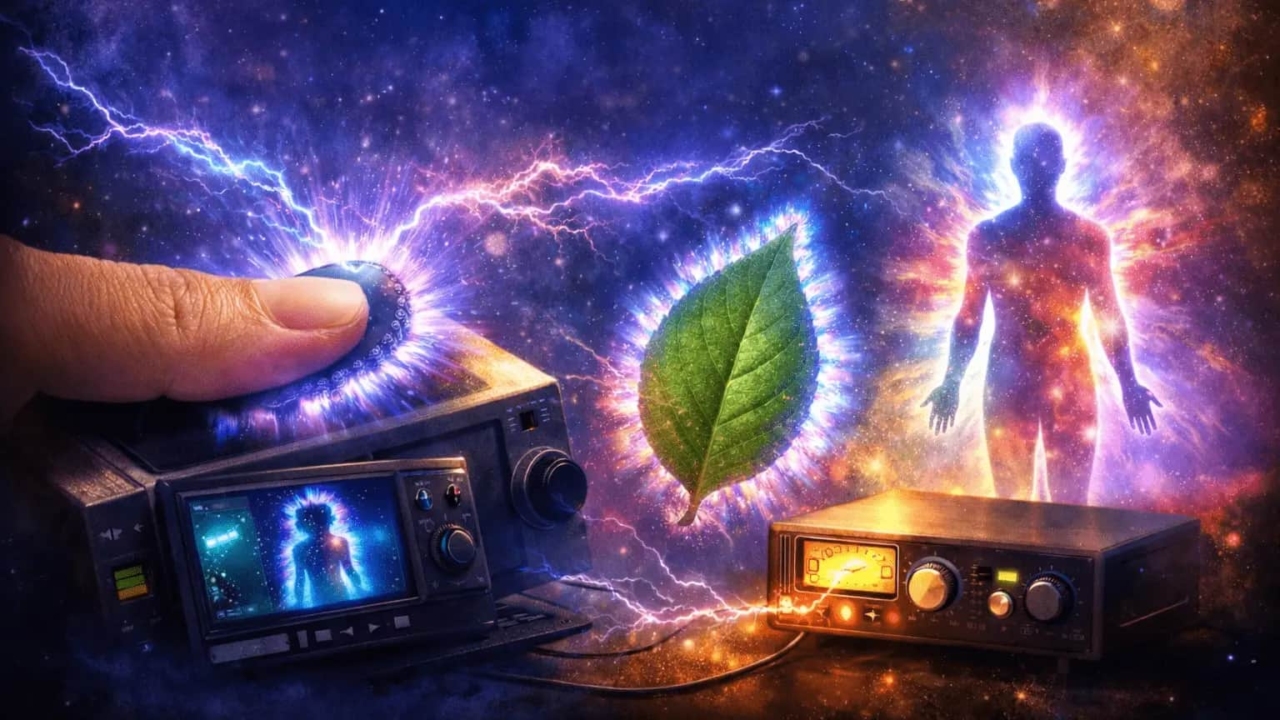
How Kirlian Photography Works: Aura Photography and Energy Field Visualization
What Is Kirlian Photography?
Kirlian photography is an imaging technique that records light emissions generated by electrical discharge around an object.
It differs from conventional photography in three key ways:
- No camera lens is used
- No visible light source is required
- The image is created by an electrical interaction rather than reflected light
The result is a luminous outline that reflects physical and environmental conditions at the moment of capture.
The Science Behind Kirlian Photography
A Kirlian camera works by capturing light patterns created when an object is placed in a high-frequency electrical field. These light patterns arise through a physical phenomenon known as corona discharge, where ionized air emits visible light around the object.
Although Kirlian photography is often discussed in the context of energy and awareness, its foundation lies in established electrical principles rather than optical imaging.
Who Discovered Kirlian Photography?
Kirlian photography was discovered in 1939 by Semyon Kirlian and his wife Valentina Kirlian in the former Soviet Union.
While working with high-frequency electrical equipment, they observed a glow forming around electrically connected objects. Their experiments led to the first photographic documentation of this effect, later known as the Kirlian effect.
How Does a Kirlian Camera Work? (Step-by-Step)
A Kirlian camera operates through a controlled electrical process:
- A high-frequency electrical generator creates an electromagnetic field
- The object is placed on a conductive surface
- The surrounding air becomes ionized
- Ionization produces visible light (corona discharge)
- The light pattern is captured on film or a digital sensor
The image reflects the interaction between electricity, the object, and the surrounding environment.
What Affects a Kirlian Image?
Kirlian images are dynamic, not fixed. They can vary due to factors such as:
- Moisture and conductivity of the object or skin
- Pressure applied during contact
- Ambient humidity and temperature
- Electrical voltage and frequency
- Physical and physiological state
Because of these variables, images may differ between sessions or change before and after relaxation, breathwork, or meditation practices.
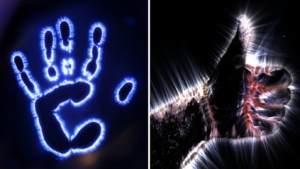
From Kirlian Photography to Digital Imaging
Traditional Kirlian photography used photographic film, which limited consistency and repeatability.
Modern systems replaced film with digital sensors, allowing:
- Standardized electrical input
- Clearer and more stable visual output
- Repeatable observations
- Comparative analysis over time
This evolution led to the development of Gas Discharge Visualization (GDV) technology.
What Is GDV (Gas Discharge Visualization)?
GDV is a digital evolution of Kirlian photography, developed by Dr. Konstantin Korotkov.
GDV systems apply gentle, short electrical impulses to the fingertips. The resulting emissions are digitally captured and processed through software, producing structured visual representations of bio-electrical responses.
Kirlian Photography vs GDV Technology
| Aspect | Kirlian Photography | GDV Technology |
| Capture Method | Photographic film | Digital sensors |
| Consistency | Variable | Standardized |
| Repeatability | Limited | High |
| Analysis | Visual observation | Software-assisted |
| Primary Use | Experimental / artistic | Wellness observation |
What Do Kirlian and GDV Images Represent?
From a scientific perspective, these images represent electrical discharge patterns influenced by physical properties such as conductivity, moisture, and environmental conditions.
From a wellness perspective, they are often used to:
- Observe stress and relaxation responses
- Reflect changes before and after meditation or breathwork
- Support self-awareness and inner observation
- Encourage mindful engagement with the body
These images are not diagnostic tools.
Kirlian Imaging Within a Holistic View of Health
From a holistic perspective, human wellbeing is understood as an interconnected relationship between the physical body, emotional patterns, mental states, and subtle awareness. Rather than existing as separate layers, these aspects continuously influence one another in response to stress, rest, lifestyle, and conscious attention.
Kirlian photography and GDV-based imaging can be viewed as reflective tools within this broader framework of holistic wellbeing. The images do not explain the cause of imbalance, nor do they define health or illness. Instead, they offer a momentary visual reference that may reflect how internal states such as tension, relaxation, or emotional load are influencing the body’s electrical responsiveness.
When approached with awareness, such visualizations support self-observation rather than interpretation — inviting individuals to notice patterns, pause, and reflect on how their inner and outer experiences interact.
Is Kirlian Photography the Same as Aura Photography?
Kirlian photography is often described as a form of aura photography, though the terminology can vary depending on tradition and context.
From a contemporary wellness perspective:
- Kirlian images capture electrical discharge patterns influenced by factors such as conductivity, moisture, and nervous system activity
- Aura photography, as understood in spiritual and contemplative traditions, refers to the subtle energetic presence surrounding the body
Rather than dismissing one in favor of the other, many practitioners view Kirlian-based imaging as a bridge—a way for subtle energetic concepts to be explored through modern technology.
In this view, the images are not treated as definitive measurements, but as symbolic and experiential representations that invite reflection, awareness, and inner inquiry.
Why Does Kirlian Imaging Continue to Interest People?
Kirlian-based imaging continues to draw interest because it resonates with a growing desire to understand health as more than isolated symptoms.
Positioned at the intersection of physics, perception, and self-awareness, these images offer a visual entry point into holistic reflection — reminding us that wellbeing is dynamic, responsive, and deeply connected to how we live, feel, and relate to ourselves.
Frequently Asked Questions
Is Kirlian photography scientifically proven?
The electrical phenomenon behind Kirlian photography—corona discharge—is scientifically established. Interpretations related to energy or aura are used symbolically in wellness contexts.
Can Kirlian images diagnose illness?
No. Kirlian and GDV images do not diagnose or treat medical conditions.
Why do Kirlian images change?
Images may change due to variations in moisture, pressure, electrical conductivity, environmental conditions, and internal states such as stress or relaxation. From a holistic self-awareness perspective, this variability is not viewed as a problem to correct, but as information that invites gentler listening, conscious regulation, and greater balance over time.
Are the electrical impulses safe?
Modern GDV systems use low-current, short-duration impulses designed for wellness observation.
A Kind Reminder
Kirlian photography and GDV-based imaging are intended for educational and wellness-awareness purposes only.
They do not replace medical care and should always be viewed as complementary tools for reflection and self-understanding.
Book your Aura, Chakra Scanning and Full Body Energy Analysis with SAMYAMA